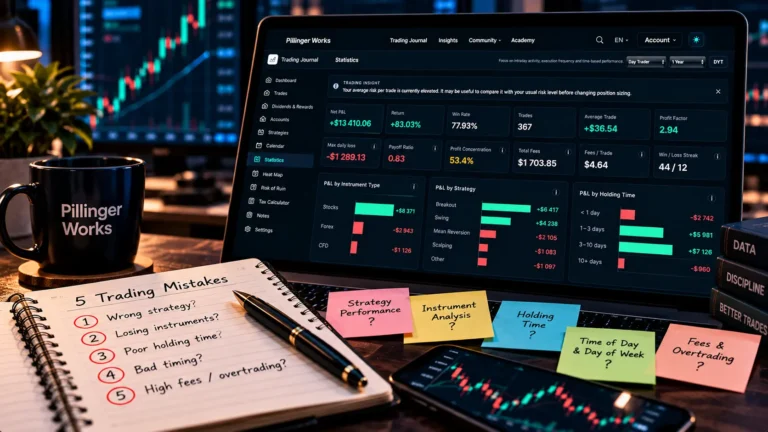
Trading Performance
The Trading Journal Shows More Than Your Account Balance
How to learn from your decisions and recognize recurring patterns
A trading journal is about more than numbers
Many traders start keeping a journal because they want to know how much they have made or lost. That is a useful starting point, but a journal can do much more. It can help you understand how you make decisions, in which situations you perform well, and when you depart from your own rules. The goal is not to justify every trade after the fact, but to recognize recurring patterns over time.
Memory is not a reliable record
A large win or painful loss can stay in our minds for a long time, while the details of ordinary trades quickly fade. As a result, we may overestimate a recent success, forget small costs, or remember a decision as carefully planned when it was not. Consistent record-keeping helps you rely on actual data instead of impressions.
What should you record about a trade?
You do not need to write a long entry about every thought. Start by making your records consistent and comparable. Record the instrument, entry and exit times and prices, trade direction and size, costs, planned risk, strategy or setup, and final result. A short note explaining why you entered and what you learned can be especially valuable.

Would like to learn about the market and trading?
You are in the best place! Our 5 levels Academy system free for everyone. After a short registration, you can easily follow your learning process and There is also a certificate for your perseverance! The whole from beginners to expert level.
Your plan and your execution are different things
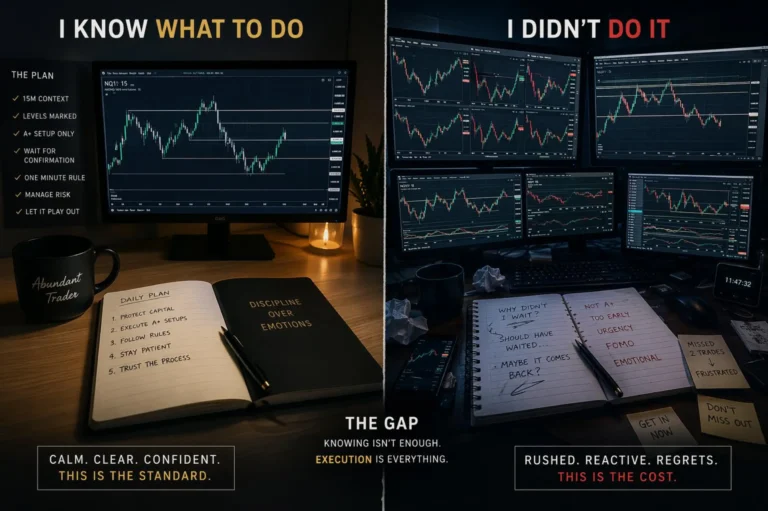
A trade can lose money even when you follow every rule. It can also make money despite breaking your plan. That is why you should record whether the trade followed your strategy, as well as its result. Did you meet your entry criteria? Did you exit at the planned stop? Was the position size appropriate? Do not judge rule-following after the fact based only on whether the trade won or lost.
You can observe emotions objectively, too
A trading journal is not a therapy diary, but a brief note about your state of mind can help you understand the context of your decisions. Were you impatient before entering? Did you try to win money back after a loss? Did a winning trade make you feel more confident than usual? The aim is not to blame every decision on emotion, but to notice whether certain states repeatedly coincide with departures from your plan.
How do entries turn into insight?
A single trade rarely provides enough information. A journal becomes more valuable when you review it regularly and look for patterns across a larger sample. You may find that a strategy performs well in certain market conditions but less well in others. Or you may discover that your largest losses come not from the strategy itself, but from oversized positions or changing rules mid-trade. Always consider sample size; do not turn a handful of examples into a permanent rule.
A journal is not a crystal ball
Historical data can help you evaluate your process, but it cannot tell you with certainty what will happen on the next trade. Markets change, strategy performance fluctuates, and past results do not guarantee future profits. The journal is not meant to create certainty; it is meant to improve decision-making and help you understand risk more clearly.
Start with a simple routine
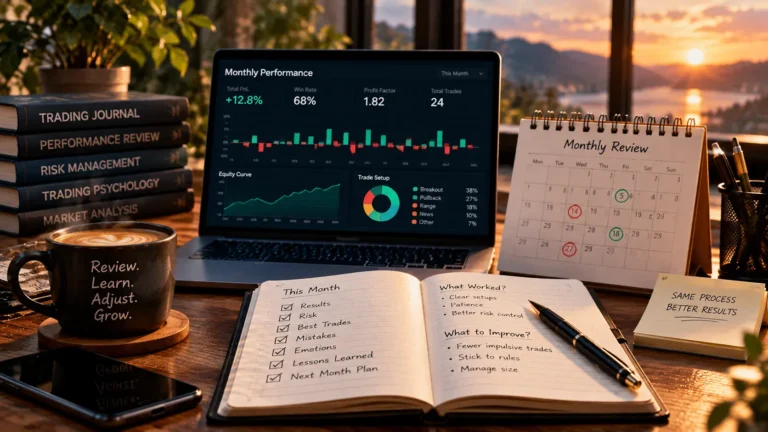
A useful system does not need to be complicated. After each trade, record the key details and a short note. Review your rule-following weekly, then examine results and risk monthly. Choose one specific question to focus on in the next period. If you try to analyze too many metrics at once, you can get lost in the details and stop reviewing consistently.
A digital journal: from records to relationships
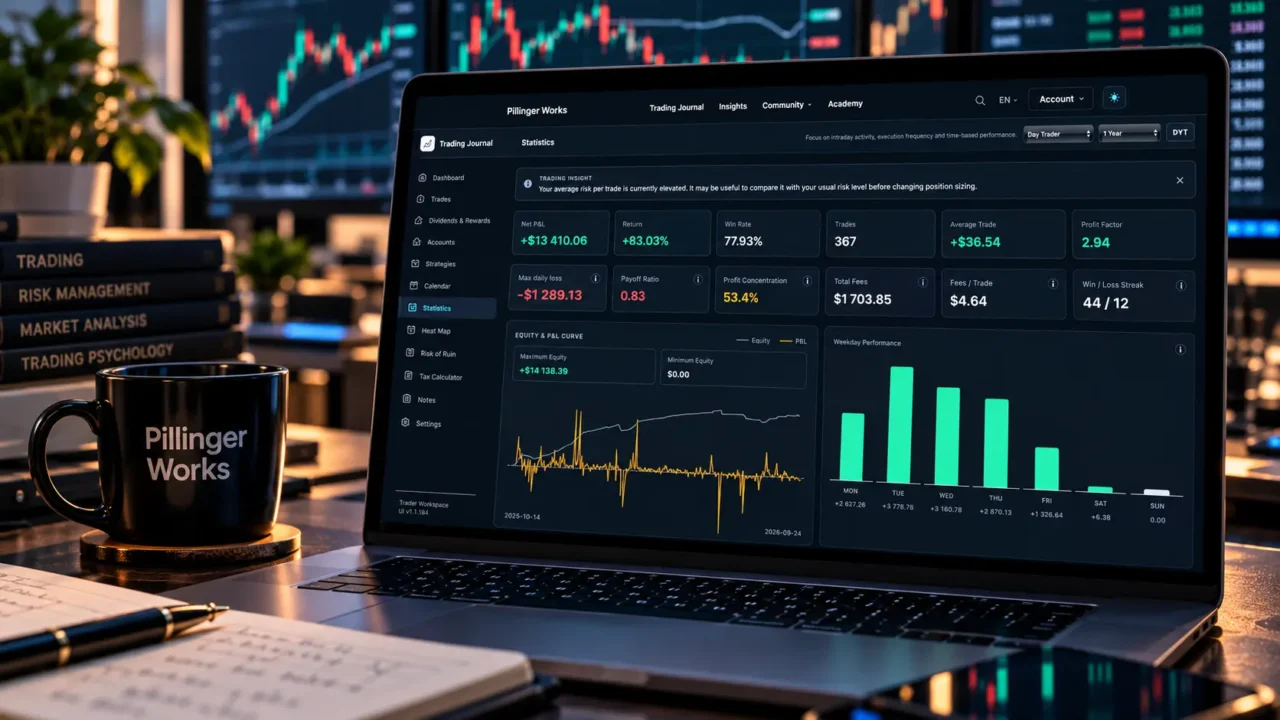
If you trade several instruments, strategies, or brokers, organizing your data can quickly become difficult. A digital trading journal can help you record trades consistently, filter data, and compare different periods. Pillinger Works Trading Journal can help with this process: the point is not just to collect data, but to make your own performance easier to understand and review.
Learning and measurement work together
A journal may reveal questions, but it will not necessarily explain market behavior on its own. If you are unsure why a strategy’s expectancy changes, or how position size relates to drawdown, it can help to study the topic systematically. Pillinger Works Academy offers structured learning materials for this purpose; your journal can then help you observe how you apply what you have learned in your own trading.
A good journal does not measure perfection
The Pillinger Works Trading Journal is not here to treat every loss as failure or every win as proof. It is here to help you see your decisions honestly, understand risk, and gradually improve what you can control. Progress often comes not from one dramatic revelation, but from many small, documented changes applied consistently.
Important note
This article is for educational purposes only and does not constitute investment or financial advice. Past performance does not guarantee future results.