The Stories of John Fitzgerald Doe
20. The Man He Became
When John looked back over the past few years, he could barely recognise the man who once saw an opportunity in every market move. Back then, he mistook quick decisions for courage and constant activity for progress. When a stock started moving, he feared missing out. When a trade turned against him, he struggled to accept that he needed to close it according to plan. He often searched for the next idea because the previous results had not matched his expectations.
No single revelation changed him. It was a collection of small, sometimes uncomfortable experiences: a position that was too large, a string of losses, a profit taken too early, a breakout that failed to continue, and periods when the best decision was not to trade at all. Over time, he understood that the market owed him no opportunities and that he was not obliged to react to every move.
His trading journal became more valuable to him than any new indicator. Not because it answered every question, but because it helped him separate memory from evidence. John began tracking the conditions in which his method worked, when he departed from his rules, and which market environments weakened his results. He did not invent a new rule after every loss, but neither did he cling blindly to an approach when its conditions were no longer present.
The biggest change was visible in the number of trades he made. In the past, he often felt at the end of a day that he had worked hard only if he had placed many trades. He no longer measured his day by trade count. He waited for market structure that suited his approach, checked his entry conditions, defined risk in advance, and acted only when an opportunity matched his plan. He traded less, but the trades he selected were higher quality, and his results became more consistent.
That did not mean every trade became profitable. Losses remained part of the process, and sometimes he still felt the old urgency when a price move began without him. The difference was that he could recognise the feeling before it became a decision. He did not need to be perfect; he needed to return consistently to his process and draw the right lesson from his mistakes.
The experience he gained in the stock market led him to his first property project. Before buying the rural house, John learned that an asking price was not the total cost, a renovation estimate was not a guarantee, and a hoped-for resale price was not certain income. The professional inspection, maximum purchase price, contingency reserve, and research into local demand helped him avoid making the decision on enthusiasm alone.
During the renovation, he also learned that an investment should not be designed around his personal taste. Essential repairs and durable, easy-to-maintain choices took priority over expensive, highly individual details. When the house finally found a buyer, John did not celebrate the difference between the asking and sale prices. He totalled every cost first.
After the full accounting, the project delivered a profit of about 25% on the capital invested. John was pleased: it was a good return on his first property flip. But he did not treat it as proof that every similar project would be just as easy or deliver the same result. He knew how much depended on the purchase price, keeping renovation costs under control, finding the right buyer, and refusing to make the actual expenses look better than they were.
Once the project was closed, he did not rush straight into buying another house. He first reviewed what had worked, what had taken longer than expected, where he should have made decisions earlier, and which costs could have been estimated more accurately. He was considering a larger project next, but not simply because the first had succeeded. He wanted more due diligence, a more detailed schedule, and clearer exit conditions built into the plan.
A few months later, he was evaluating an opportunity for a larger property project. It would involve more work, more capital tied up, and more complex construction, so John did not treat it as an automatic next step. He asked the same questions he asked in trading: what assumptions support the plan, what happens in the downside scenario, and at what point should he walk away? The new project was still in the planning stage, but John knew enthusiasm alone was not enough to begin.
His trading had reached a new level too. He no longer chased daily excitement; he waited for opportunities that matched his method. He defined risk in advance rather than explaining it away afterwards. He did not condemn his strategy after one loss, nor did he consider himself invincible after a winning streak. He evaluated results over a longer period, alongside the quality of his decisions.
One morning, he sat down in front of his charts again. The market was moving, several stocks showed dramatic breakouts, and the news was full of urgent opportunities. John reviewed his watchlist. One stock did not meet his entry rules; another offered unacceptable risk; and a third had not yet produced the confirmation he wanted. He did not place a trade just to feel active.
He closed the charts and left for his next meeting about the property project. On his desk lay his trading journal beside the preliminary calculations for the new investment. They were two different worlds, with different risks and time horizons, but John brought the same discipline to both: he tested assumptions, clarified objectives, and refused to let fear or greed make decisions for him.
The story of John Fitzgerald Doe ends here—not because he will never make another mistake, and not because he has discovered the market’s secret formula. It ends because he no longer expects the same things from trading that he did at the beginning. He no longer searches for certainty in an uncertain market. He has built a process he can return to, even when events do not unfold as planned.
The old John asked, “How much can I make from this opportunity?” The new John asks first, “What supports this decision, how much am I risking, and what happens if I am wrong?” That difference changed more than his trading. It also made him better equipped to put the capital he had earned to work in new areas, thoughtfully and responsibly.
New projects, new market environments, and future decisions deserve a story of their own. John is ready for them—not because he know every answer, but because he finally know how to ask the right questions.
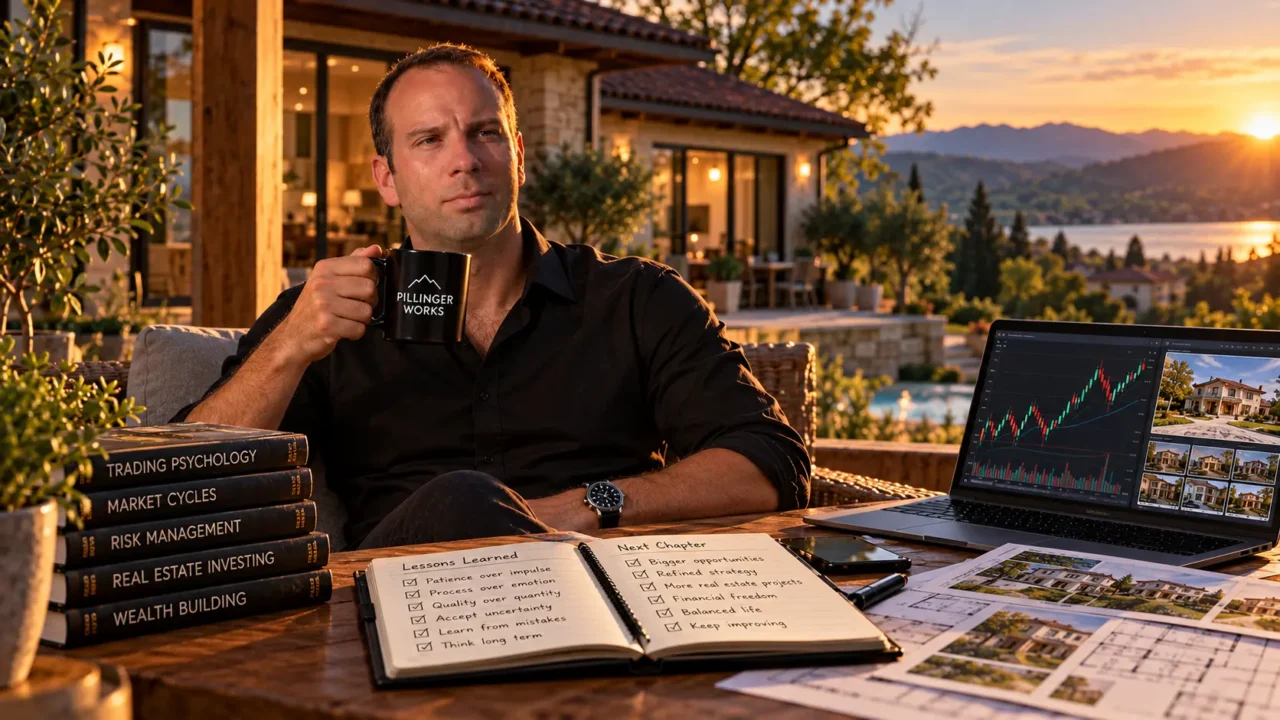
Final thought: success comes not from perfect decisions, but from a consistent process, respect for risk, and learning from experience.
This story is for educational purposes only and does not constitute investment or financial advice.